Breathwork
made easy.
Your nervous system has a reset button.
One tap activates it. Backed by peer-reviewed research.

One tap. Three minutes. A calmer you. — Free your first week.
Based on vagal nerve stimulation research · View studies ↓
A slow exhale activates your parasympathetic nervous system — the body's built-in calm response.
Stress hormone reduced through regular diaphragmatic breathing practice.
Heart rate variability — a biomarker of resilience — increases with slow breathing.
A YouTube video can't track your heart rate,
adapt to your schedule, or measure if it worked.
Open. Tap. Breathe.
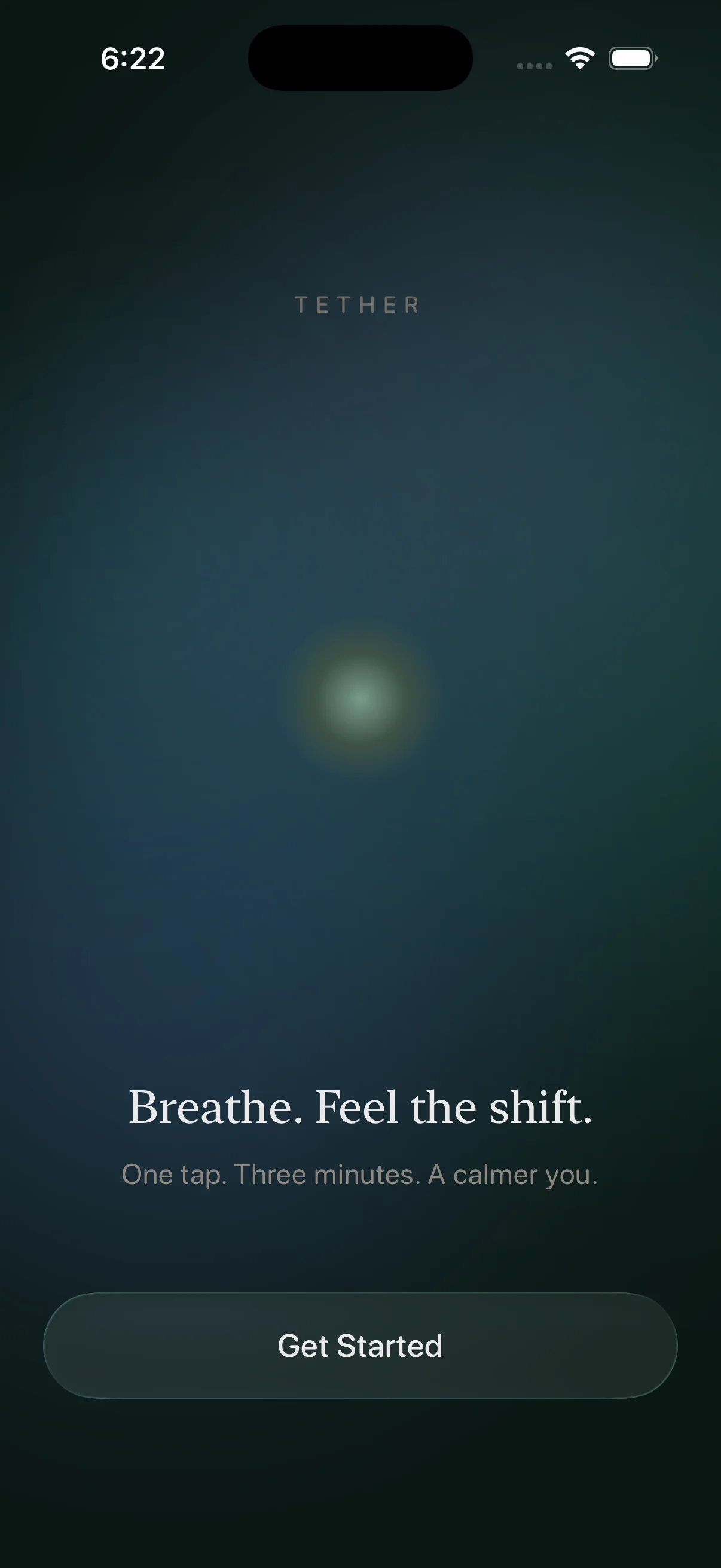
Tether suggests the right exercise for your moment — morning energy, evening calm, a quick reset.

No setup, no decisions, no friction — a guided voice walks you through each breath.
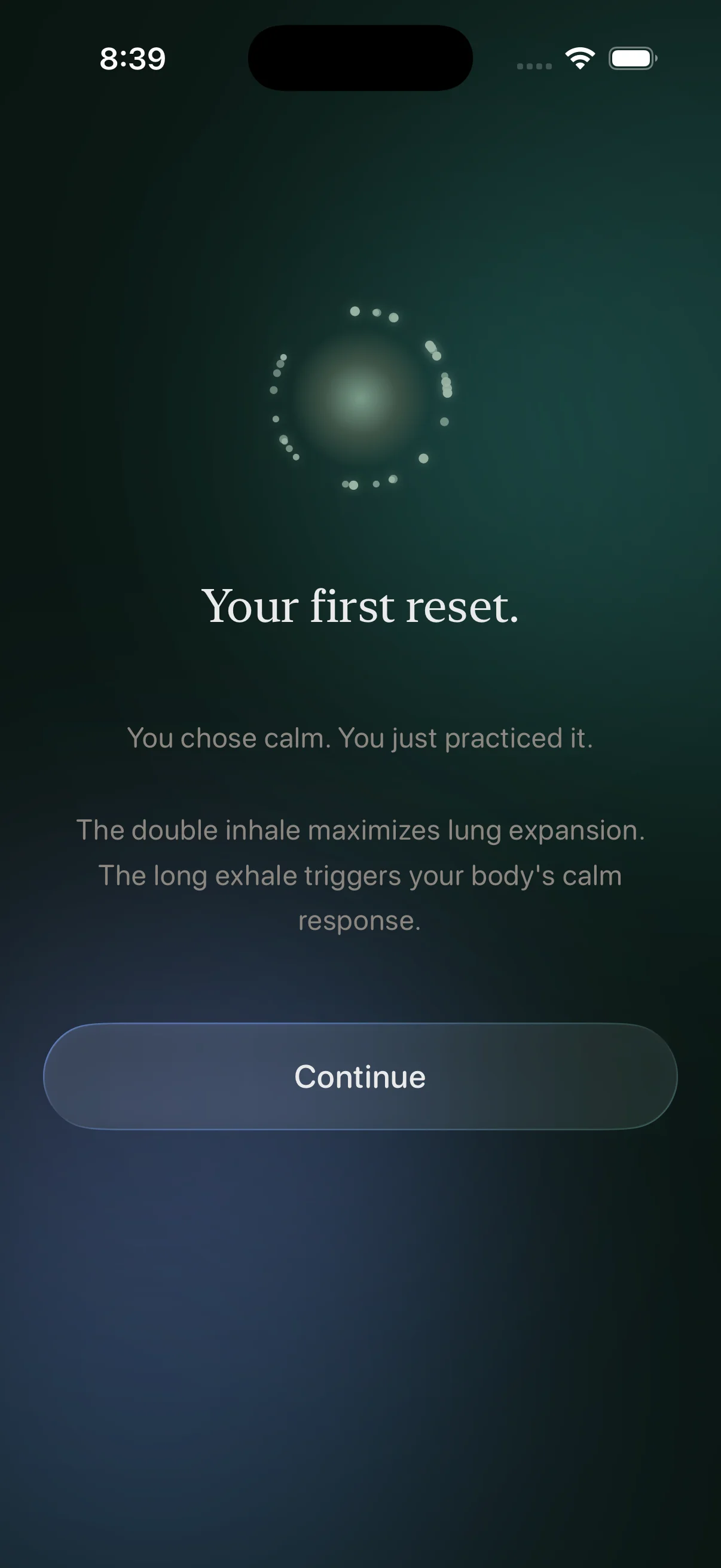
Your heart rate drops, your mind quiets, and Tether shows you the shift.
The science is clear.
Controlled breathing is the fastest way to regulate your nervous system.
Vagal nerve activation
A slow exhale stimulates your vagus nerve — the primary brake pedal of your stress response. Heart rate slows, cortisol drops, digestion restarts.
HRV improvement
Heart rate variability — a biomarker of stress resilience — rises measurably during slow breathing. Practice compounds the effect.
Cortisol reduction
Regular diaphragmatic breathing reduces salivary cortisol — your body's chemical stress signal — over weeks of practice.
Start with a free week.
Available on the App Store now.
One tap. Three minutes. A calmer you.